
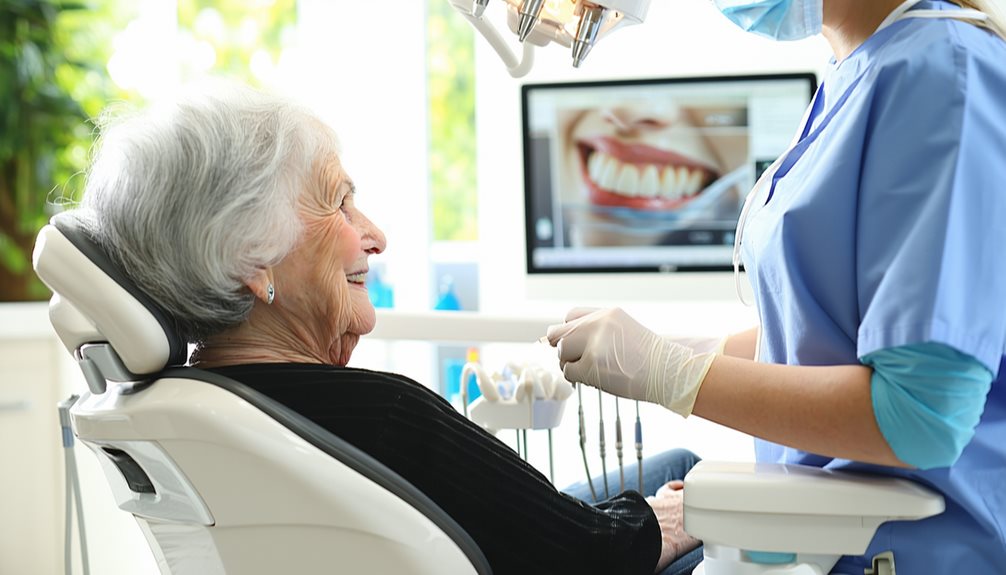
Choosing top clinics for elderly oral care guarantees access to specialized expertise in geriatric dentistry, specifically tailored to address unique challenges such as tooth loss and conditions impacting manual dexterity. These clinics utilize advanced diagnostic tools to create thorough, evidence-based individualized treatment plans that incorporate preventive strategies and biocompatible materials. Facilities are designed with accessibility and comfort in mind, employing cutting-edge technology like 3D imaging and CAD/CAM systems to enhance both diagnostics and patient comfort. Additionally, personalized care fosters a respectful and inclusive environment that encourages patient participation in health maintenance. Explore further to understand the transformative improvements possible.
Expertise in Geriatric Dentistry
In geriatric dentistry, practitioners possess specialized expertise that addresses the unique oral health challenges faced by elderly patients. The aging population often encounters distinct geriatric challenges such as tooth loss, xerostomia (dry mouth), and diminished manual dexterity, which can complicate oral hygiene maintenance.
These issues necessitate a tailored approach to care, emphasizing prevention and early intervention. A thorough understanding of systemic health conditions prevalent in this demographic, such as diabetes and cardiovascular disease, further enhances the ability of geriatric dentists to provide holistic and effective treatment plans.
Dental anxiety, a common barrier to accessing oral healthcare, is exacerbated in elderly patients due to physical frailty and previous negative experiences. Innovative strategies, such as the implementation of sedation techniques and the use of calming environments, are pivotal in mitigating dental anxiety, thereby improving adherence to care recommendations.
Evidence-based practices guide geriatric dentists in employing advanced technologies and materials suited to the specific needs of older adults. This commitment to innovation guarantees that practitioners not only address the functional aspects of oral health but also enhance the overall quality of life for their patients by fostering long-term oral health and well-being.
Comprehensive Oral Health Services
Although the oral health needs of elderly patients are increasingly complex, extensive oral health services are designed to address these multifaceted challenges effectively. Top clinics offering thorough oral health services employ a multidisciplinary approach to guarantee that each patient receives tailored care.
The focus on preventive care is paramount, as it reduces the risk of oral diseases, thereby promoting overall health and enhancing the quality of life for elderly patients. This entails regular dental check-ups, professional cleanings, and patient education about proper oral hygiene techniques, which are critical in managing age-related oral health issues.
Evidence-based practices are at the core of these services, assuring that the care provided is both innovative and effective. Clinicians are adept at recognizing the unique oral health concerns of the elderly, including xerostomia, periodontal disease, and tooth wear, and are equipped with strategies to mitigate these conditions.
Preventive care protocols, combined with the promotion of ideal oral hygiene, serve to prevent the progression of oral diseases, making them a cornerstone of thorough care. This patient-focused approach not only addresses immediate dental needs but also anticipates future challenges, setting a new standard in geriatric oral health management.
Advanced Dental Technology
Building on the foundation of extensive oral health services, the integration of advanced dental technology greatly enhances the ability to meet the specialized needs of elderly patients. This demographic often presents with unique challenges, such as diminished dexterity and increased susceptibility to oral diseases. By employing digital innovations, top clinics are equipped to offer precise diagnostics and effective interventions, fostering a proactive approach to oral health maintenance.
One notable advancement is the use of digital imaging techniques, such as 3D cone beam computed tomography (CBCT). This technology delivers high-resolution images, allowing for meticulous assessment of oral structures and aiding in the early detection of conditions like periodontal disease and bone loss. As a result, these insights facilitate the implementation of targeted preventive measures, minimizing the risk of progression into more severe states.
Another promising digital innovation is the incorporation of CAD/CAM systems for prosthetic design and manufacturing. This technology guarantees the creation of custom-fitted dentures and crowns with enhanced accuracy, thereby improving comfort and functionality for elderly patients.
Such innovations underscore a commitment to enhancing quality of life, enabling elderly patients to maintain ideal oral health with minimal inconvenience. Consequently, advanced dental technology remains pivotal in revolutionizing elderly oral care.
Personalized Treatment Plans
Personalized treatment plans are vital in addressing the diverse oral health needs of elderly patients, guaranteeing that each individual receives care tailored to their specific conditions and preferences. This approach begins with thorough individualized assessments, which evaluate not only the current oral health status but also consider medical history, existing comorbidities, and lifestyle factors.
Such extensive evaluations are essential in identifying unique risk factors and potential complications that may arise during treatment.
Tailored therapies are then developed based on these assessments, integrating evidence-based practices that prioritize both efficacy and patient comfort.
These therapies are designed to provide ideal outcomes through the use of innovative dental techniques and materials that are specifically chosen to match the patient’s specific oral health needs.
For example, the use of biocompatible materials and minimally invasive procedures guarantees that treatments are both safe and effective, addressing the unique physiological changes in the elderly population.
Comfortable and Accessible Facilities
Creating comfortable and accessible facilities is fundamental to delivering high-quality oral care for elderly patients. This demographic often faces unique physical and cognitive challenges that require special considerations in dental clinic design. Wheelchair accessibility is paramount, ensuring that all areas of the clinic, from entrance to treatment rooms, are easily navigable for patients with mobility aids. Innovative clinics incorporate wide doorways, ramps, and elevators, demonstrating a commitment to inclusivity and patient autonomy.
Additionally, a soothing environment notably enhances the patient experience, reducing anxiety and fostering relaxation. Evidence-based design principles suggest the integration of calming colors, natural lighting, and ergonomic furniture to create a welcoming atmosphere.
Technological advancements further augment comfort and accessibility.
Positive Patient Testimonials
Patient testimonials serve as a compelling indicator of the effectiveness and compassionate care provided by elderly oral care clinics.
Real-life success stories and heartfelt praise from patients underscore the genuine experiences that highlight both clinical outcomes and patient satisfaction.
These narratives not only enhance our understanding of patient-centered care but also contribute valuable insights into the emotional and social impact of oral health services on the elderly population.
Real-Life Success Stories
Witnessing the transformative impact of elderly oral care clinics through real-life success stories underscores the profound benefits of specialized dental care for older adults. These patient journeys highlight how tailored interventions can considerably enhance oral health, thereby elevating overall quality of life.
For instance, when addressing complex cases such as severe periodontal disease, innovative clinics employ advanced diagnostic tools and minimally invasive procedures. These approaches guarantee extensive, individualized care that not only alleviates symptoms but also restores function and aesthetics, demonstrating transformative care in action.
Consider the case of an elderly patient grappling with chronic discomfort due to ill-fitting dentures. Through a meticulous evaluation and the application of cutting-edge prosthodontics, the clinic provided a custom-fitted solution, drastically improving the patient’s comfort and confidence. This success story exemplifies how specialized care can resolve long-standing issues, fostering enhanced social interaction and psychological well-being.
Furthermore, the integration of preventive strategies, such as personalized hygiene regimens and regular monitoring, underscores the clinics’ commitment to sustainable oral health.
These real-life narratives serve as compelling evidence of the exceptional outcomes achievable through expert, patient-centered elderly oral care, inspiring further innovation in the field.
Heartfelt Praise Shared
Many have shared heartfelt praise for the exceptional care received at elderly oral care clinics, highlighting the profound impact on their lives. Testimonials from patients and their families frequently emphasize the elevated levels of patient satisfaction stemming from the clinics’ commitment to compassionate care. Evidently, the integration of advanced dental technologies and personalized treatment plans has redefined expectations in the sphere of geriatric dentistry.
These clinics are distinguished by their patient-centered approach, where each individual’s unique needs and concerns are meticulously addressed. The emphasis on compassionate care extends beyond technical proficiency, fostering an environment where elderly patients feel valued and respected. Such a holistic approach not only enhances patient satisfaction but also encourages active participation in oral health maintenance, contributing to better long-term outcomes.
This patient-focused ethos is further reflected in the clinics’ utilization of cutting-edge innovations, such as minimally invasive procedures and custom-fitted prosthetics, which are tailored to enhance comfort and efficacy.
The testimonials serve as compelling evidence of the transformative power of these clinics, underscoring the importance of selecting providers who are dedicated to advancing elderly oral care through evidence-based practices and empathetic patient interactions.
Genuine Patient Experiences
Drawing from the heartfelt praise shared by patients and their families, the genuine experiences at elderly oral care clinics offer compelling insights into their success. These endorsements underscore the high level of patient satisfaction achieved through innovative clinical practices and empathetic care models.
Elderly patients often express gratitude for the personalized attention they receive, which not only addresses their unique dental needs but also enhances their overall well-being. Caregivers, whose insights are invaluable, frequently commend the clinics for their extensive approach to oral health, which extends beyond routine procedures to encompass preventive care and education tailored specifically for the elderly.
Evidence from the endorsements highlights how these clinics employ advanced technologies and methodologies that are both patient-centered and evidence-based. This approach fosters an environment where innovation thrives, resulting in superior care outcomes.
For example, patients frequently report reduced levels of anxiety and discomfort, attributing their positive experiences to the clinics’ state-of-the-art facilities and attentive staff. The integration of caregiver insights into treatment plans further enhances patient satisfaction, ensuring that each patient’s journey is met with understanding and precision.
Ultimately, these authentic patient experiences serve as a reflection of the clinics’ commitment to excellence in elderly oral care.
Frequently Asked Questions
What Insurance Plans Are Typically Accepted by Top Clinics for Elderly Oral Care?
Top clinics for elderly oral care often accept a range of insurance coverage options, including Medicare Advantage plans, while also providing flexible payment options. This patient-focused approach guarantees accessibility and affordability, aligning with innovative healthcare solutions.
Are There Financial Assistance Options Available for Seniors on a Fixed Income?
Many clinics offer financial aid options and budgeting strategies for seniors on fixed incomes. These solutions include sliding scale fees, payment plans, and assistance programs, designed to guarantee accessible and thorough oral healthcare for elderly patients.
How Do Top Clinics Handle Emergency Dental Situations for Elderly Patients?
Top clinics efficiently manage emergency dental situations for elderly patients through advanced emergency procedures and proactive patient communication. By integrating cutting-edge technology and evidence-based practices, they guarantee prompt, effective care while maintaining clear, empathetic communication with patients and families.
Are Language Translation Services Available for Non-English Speaking Elderly Patients?
Top clinics often provide language accessibility and demonstrate cultural sensitivity by offering translation services for non-English speaking elderly patients. This approach guarantees clear communication, enhances patient satisfaction, and fosters an inclusive, patient-centered care environment, promoting ideal oral health outcomes.
What Measures Are in Place to Accommodate Elderly Patients With Mobility Challenges?
Clinics implement wheelchair access and appointment flexibility to accommodate elderly patients with mobility challenges. These measures are evidence-based, ensuring patient-centered care through innovative design and scheduling practices, thereby enhancing accessibility and improving overall healthcare experience for older adults.
Conclusion
Selecting top clinics for elderly oral care is essential due to their expertise in geriatric dentistry and thorough oral health services. These clinics utilize advanced dental technology and develop personalized treatment plans tailored to the unique needs of elderly patients. Facilities are designed for comfort and accessibility, ensuring a positive experience. The effectiveness of these clinics is supported by positive patient testimonials, highlighting their commitment to evidence-based practices and patient-focused care, ultimately enhancing oral health outcomes for the elderly population.

