
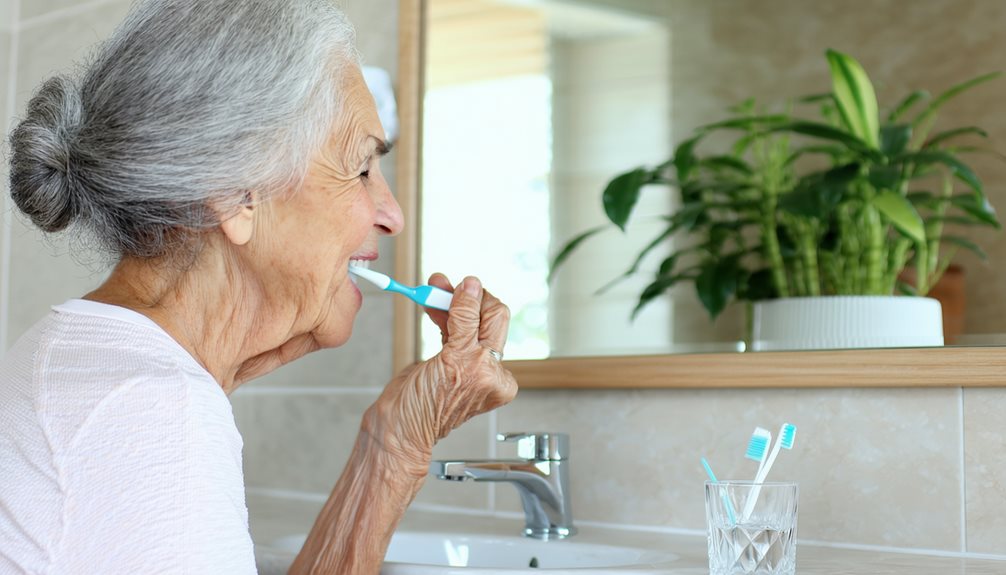
Long-term oral health strategies for seniors involve systematic dental care and personalized hygiene routines. Regular dental check-ups are imperative for early detection of conditions like periodontal disease and carious lesions, with advancements such as digital radiography enhancing diagnostic accuracy. Tailored preventive measures, including fluoride treatments and ergonomic toothbrushes, cater to individual needs. Proper denture maintenance is essential, utilizing tools like ultrasonic cleaners and ensuring regular denture adjustments. Nutritional support with calcium and vitamin D fortifies oral structures, while sugar substitutes like xylitol reduce cariogenic activity. Extensive strategies not only promote dental health but also enhance life satisfaction, ensuring well-being.
Regular Dental Check-Ups
For many, maintaining oral health through regular dental check-ups is an essential aspect of aging gracefully. Dental examinations serve as a cornerstone in implementing preventive measures that mitigate the risk of oral diseases commonly affecting seniors.
These check-ups facilitate the early detection of oral pathologies, including oral cancer, which can be asymptomatic in its initial stages. By employing advanced diagnostic technologies, such as digital radiography and oral cancer screening devices, dental professionals can identify precancerous lesions and abnormalities with increased precision.
Routine dental appointments provide an opportunity to evaluate the overall oral health status, including the assessment of periodontal health, detection of carious lesions, and the integrity of prosthetic devices.
Evidence-based practices endorse these evaluations as integral to preventing the progression of periodontal disease and tooth decay, both of which considerably impact systemic health and quality of life. Additionally, dental professionals can tailor preventive strategies, such as fluoride treatments and sealants, to address individual risk factors.
In an era of rapid technological advancement, dental check-ups are evolving to incorporate innovative tools and methods, ensuring that seniors receive extensive care.
This proactive approach not only extends oral health longevity but also enhances life satisfaction as individuals age.
Personalized Oral Hygiene Routines
Recognizing the diverse oral health needs of seniors allows for the development of personalized oral hygiene routines that optimize individual care. As the aging population presents with a spectrum of dental conditions, ranging from xerostomia to periodontal disease, individualized care becomes paramount.
Clinical evidence underscores the importance of tailored techniques, which can include the selection of toothbrushes with ergonomic handles for those with arthritis or the use of interdental cleaners for enhanced plaque removal. Such customization not only enhances oral hygiene outcomes but also accommodates the specific physiological and cognitive changes associated with aging.
Innovative approaches in personalized oral care may incorporate the integration of digital tools, such as oral health apps that remind seniors of their dental care schedules and track their oral health metrics. Additionally, fluoride varnishes and antimicrobial rinses can be adjusted to address varying levels of caries risk and oral microbial activity.
Evidence-based protocols further recommend personalized dietary consultations to mitigate factors contributing to dental erosion and decay. By embracing these individualized strategies, dental professionals can markedly improve the quality of life for seniors, ensuring that their oral health routines are both effective and sustainable in the long term.
Denture Care and Maintenance
Proper denture care and maintenance is crucial for guaranteeing oral health and overall well-being among seniors who rely on prosthetic devices for daily function.
Denture cleaning is an essential component of this regimen, as it prevents the accumulation of biofilm and microbial colonization that could lead to oral infections such as denture stomatitis. Utilizing ultrasonic cleaners or antimicrobial solutions can enhance the efficacy of traditional brushing methods, offering a cutting-edge approach to maintaining prosthetic hygiene.
Regular denture adjustment is equally critical to guarantee ideal fit and comfort, thereby reducing the risk of tissue irritation and subsequent ulceration. As alveolar bone resorption is a dynamic and ongoing process, periodic evaluations by dental professionals are advised to assess the need for relining or rebasing of the prosthesis.
Evidence suggests that well-maintained dentures not only improve masticatory function but also promote psychosocial well-being by enhancing speech and aesthetics.
Embracing innovative materials and design technologies, such as digital scanning and 3D printing, can further revolutionize the customization and adaptability of dentures, aligning with the evolving needs of the senior population.
Consequently, integrating these advanced methodologies can considerably contribute to improved long-term oral health outcomes for seniors.
Nutrition for Healthy Teeth
Ideal nutrition plays a pivotal role in maintaining oral health, particularly for seniors aiming to preserve their natural dentition. As age progresses, dietary adjustments become essential to support dental integrity and mitigate the risk of caries and periodontal disease.
Calcium sources such as dairy products, fortified plant milks, and leafy greens are critical for maintaining bone density and tooth strength. An adequate intake of calcium, paired with vitamin D, enhances calcium absorption, thereby fortifying the enamel and alveolar bone.
Moreover, the strategic use of sugar substitutes can effectively reduce the incidence of cariogenic activity. Substitutes like xylitol and erythritol not only provide sweetness without the adverse effects of sucrose but also inhibit the growth of harmful oral bacteria.
Evidence suggests that xylitol, in particular, can disrupt the energy production pathway of Streptococcus mutans, leading to decreased plaque formation and acid production.
Incorporating innovative dietary practices into daily routines can empower seniors to maintain oral health, aligning with a thorough, long-term strategy for sustaining quality of life.
Managing Dry Mouth
Xerostomia, commonly referred to as dry mouth, is a prevalent condition among seniors, often resulting from polypharmacy, systemic diseases, or age-related reductions in salivary gland function.
This condition can markedly compromise oral health, necessitating innovative management strategies.Clinicians should prioritize the identification of underlying etiologies to tailor interventions effectively. Saliva substitutes, scientifically formulated to mimic natural saliva, offer a promising solution. These substitutes typically contain carboxymethylcellulose or hydroxyethylcellulose, enhancing lubrication and providing symptomatic relief. Incorporating saliva substitutes into daily oral hygiene regimens can mitigate the deleterious effects of xerostomia.
Furthermore, hydration techniques play a vital role in managing dry mouth. Seniors should be encouraged to maintain adequate fluid intake, aiming for water as the primary source, to optimize systemic hydration.
Additionally, the use of humidifiers in living spaces can augment environmental moisture, reducing the sensation of oral dryness. Chewing sugar-free gum or lozenges, particularly those containing xylitol, can stimulate residual salivary gland activity, offering a non-pharmacological approach to enhance salivary flow.
These evidence-based strategies, when integrated into thorough care plans, can greatly improve the quality of life for seniors experiencing xerostomia, demonstrating a commitment to advancing geriatric oral health.
Affordable Dental Care Options
Steering through the landscape of affordable dental care is crucial for seniors, who often face financial constraints alongside increased oral health needs. Evidence suggests that community dental programs play an important role in bridging the gap for those unable to access traditional dental services.
These programs, often supported by public health initiatives or nonprofit organizations, provide cost-effective solutions through reduced-fee services and sliding scale payment models. They are particularly tailored to address the diverse needs of the senior population, delivering preventive, restorative, and emergency care with an emphasis on accessibility and affordability.
Moreover, insurance coverage options have evolved to accommodate the growing demand for senior-specific dental care. Traditional Medicare does not cover routine dental procedures, which necessitates the exploration of supplementary plans.
Medicare Advantage and standalone dental insurance policies offer varying degrees of coverage, including routine cleanings, exams, and more complex procedures such as dentures and implants. These plans often incorporate innovative approaches, such as tele-dentistry consultations, to enhance service delivery and patient satisfaction.
Frequently Asked Questions
What Are Some Effective Natural Remedies for Oral Health Issues in Seniors?
Addressing oral health issues in seniors can benefit from evidence-based natural remedies. Clove oil is known for its analgesic and antimicrobial properties, while turmeric paste offers anti-inflammatory benefits. Both remedies support innovative approaches in oral health management.
How Can Seniors Prevent Gum Disease Beyond Regular Dental Care?
Seniors can prevent gum disease by integrating nutritional impact strategies, including increased intake of antioxidants and omega-3 fatty acids, alongside lifestyle changes such as smoking cessation and enhanced oral hygiene protocols, supported by evidence-based clinical practices.
Are There Oral Health Products Specifically Designed for Senior Citizens?
Yes, senior-specific oral health products exist, including toothpaste options enriched with fluoride and potassium nitrate for sensitivity, and advanced denture care solutions like biofilm-removing cleansers, enhancing oral hygiene through targeted formulations addressing age-related dental challenges.
How Does Medication Affect Oral Health in Older Adults?
Medication side effects in older adults often contribute to oral health challenges, particularly xerostomia (dry mouth), which can exacerbate dental caries and periodontal disease. Innovative solutions are required to mitigate these effects, enhancing oral health outcomes.
What Role Does Genetics Play in Oral Health for Seniors?
Genetic predisposition greatly influences oral health in seniors, affecting susceptibility to periodontal disease and tooth decay. Nonetheless, rigorous oral hygiene practices can mitigate genetic risks, highlighting the necessity of integrating genetic insights into personalized preventive oral care strategies.
Conclusion
The implementation of long-term oral health strategies for seniors is vital for maintaining peak dental health and quality of life. Regular dental check-ups facilitate early detection and management of oral diseases. Personalized oral hygiene routines and proper denture care guarantee effective plaque control and prosthetic longevity. Nutritional guidance supports the maintenance of healthy teeth, while management of xerostomia (dry mouth) alleviates discomfort and reduces caries risk. Access to affordable dental care remains essential for thorough oral health maintenance in senior populations.

